The best connected living and dining spaces feel unified without becoming repetitive. These tips focus on continuity in color, flooring, scale, and lighting so both rooms feel like they belong together while still doing different jobs.
Idea 1
Use One Main Palette
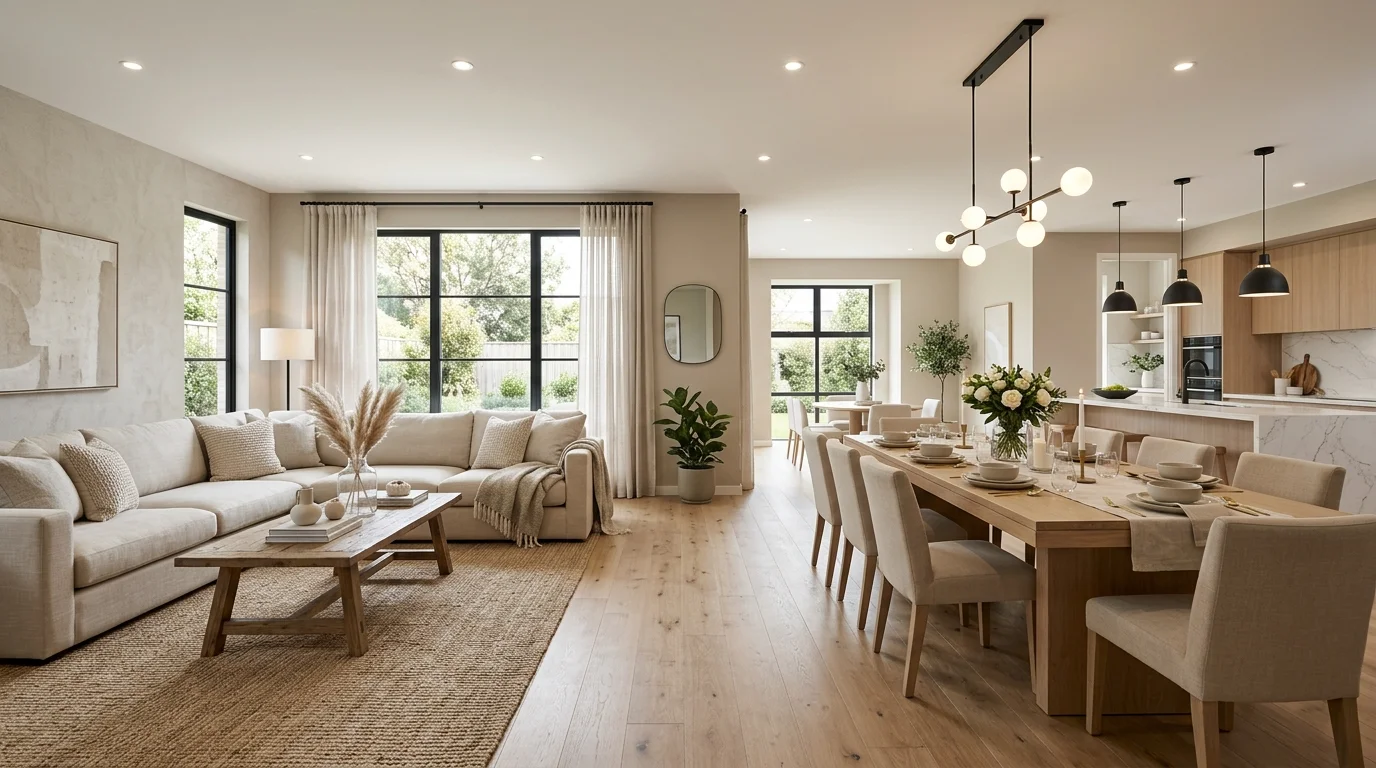
A shared palette is one of the easiest ways to connect two rooms visually. It does not have to be identical, just related enough to feel intentional.
Idea 2
Repeat Rug Logic
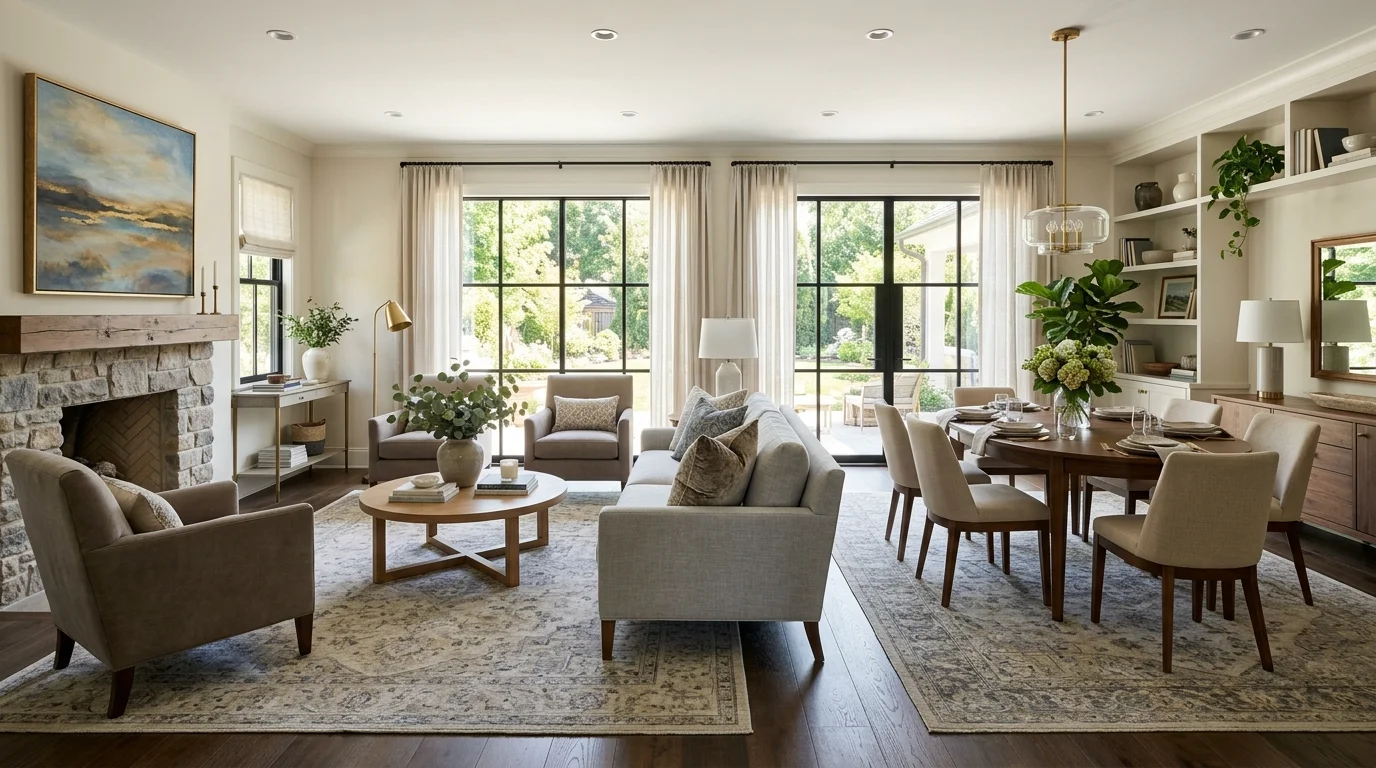
Rugs do not need to match exactly, but they should feel like they belong to the same home. Similar tones or texture can bridge the gap beautifully.
Idea 3
Repeat Black and Wood Accents
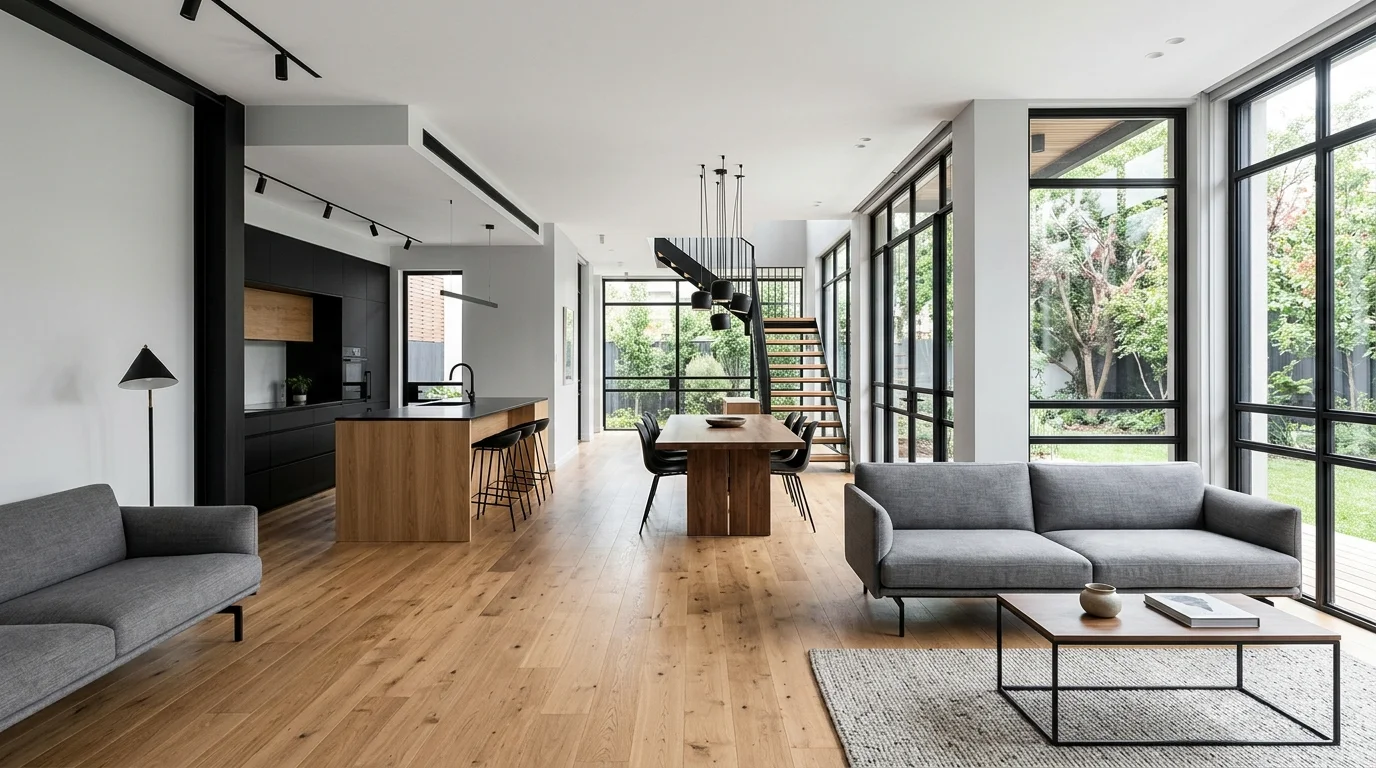
Repeating one or two strong finishes across both zones can do more than copying every furniture shape. Black and wood are especially effective for this.
Idea 4
Align the Layout
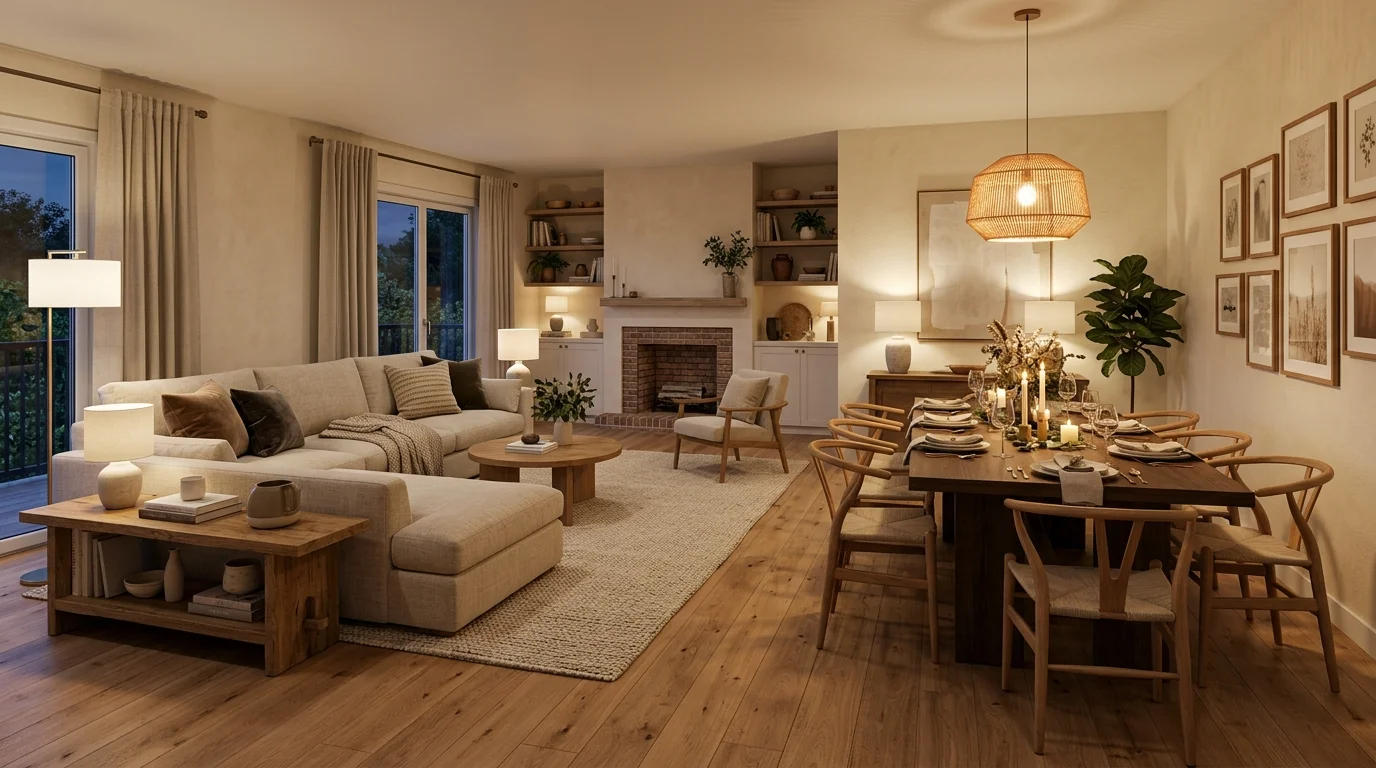
Furniture placement matters just as much as color. When the sightlines feel deliberate, the rooms naturally read as one composition.
Idea 5
Use a Light Divider, Not a Barrier
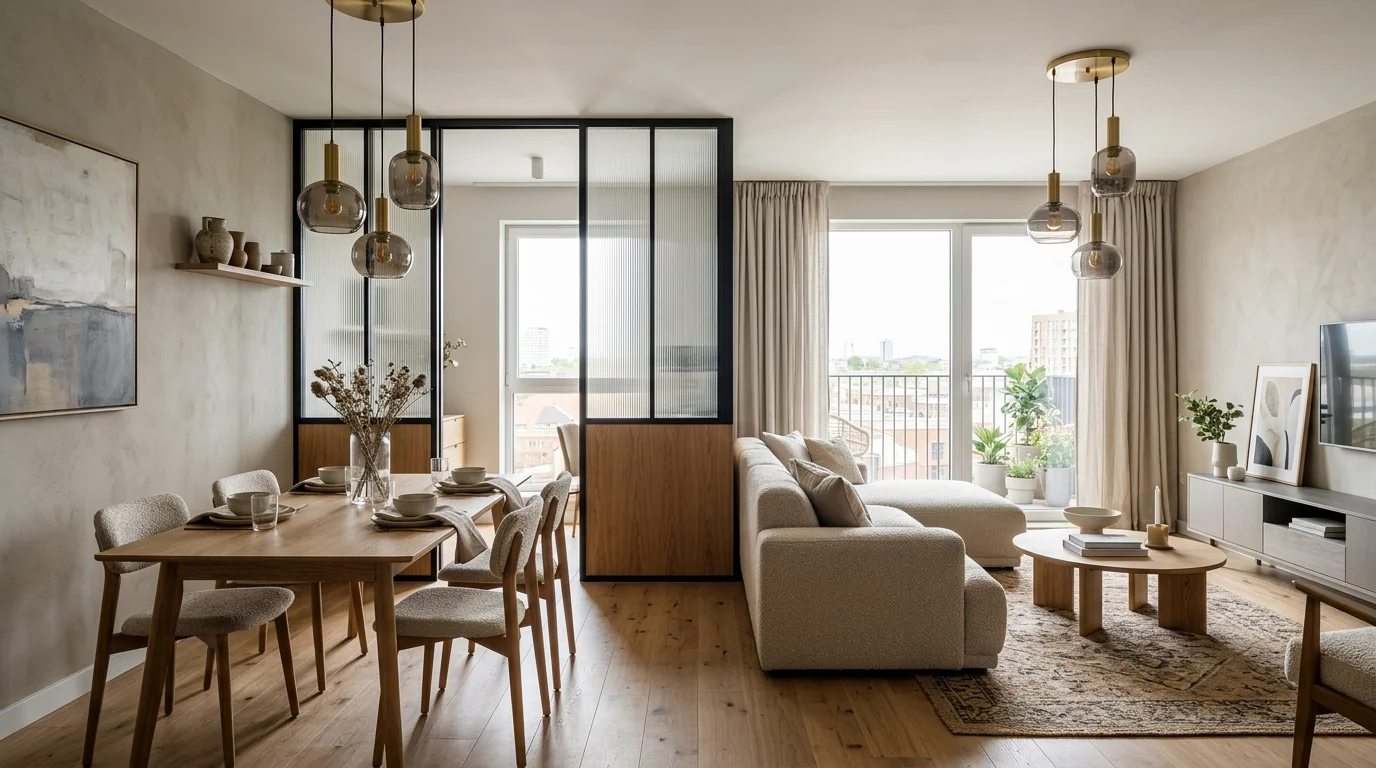
A partial divider can create subtle structure without breaking the flow. Glass is especially useful because it preserves light and openness.
Idea 6
Repeat Accent Colors
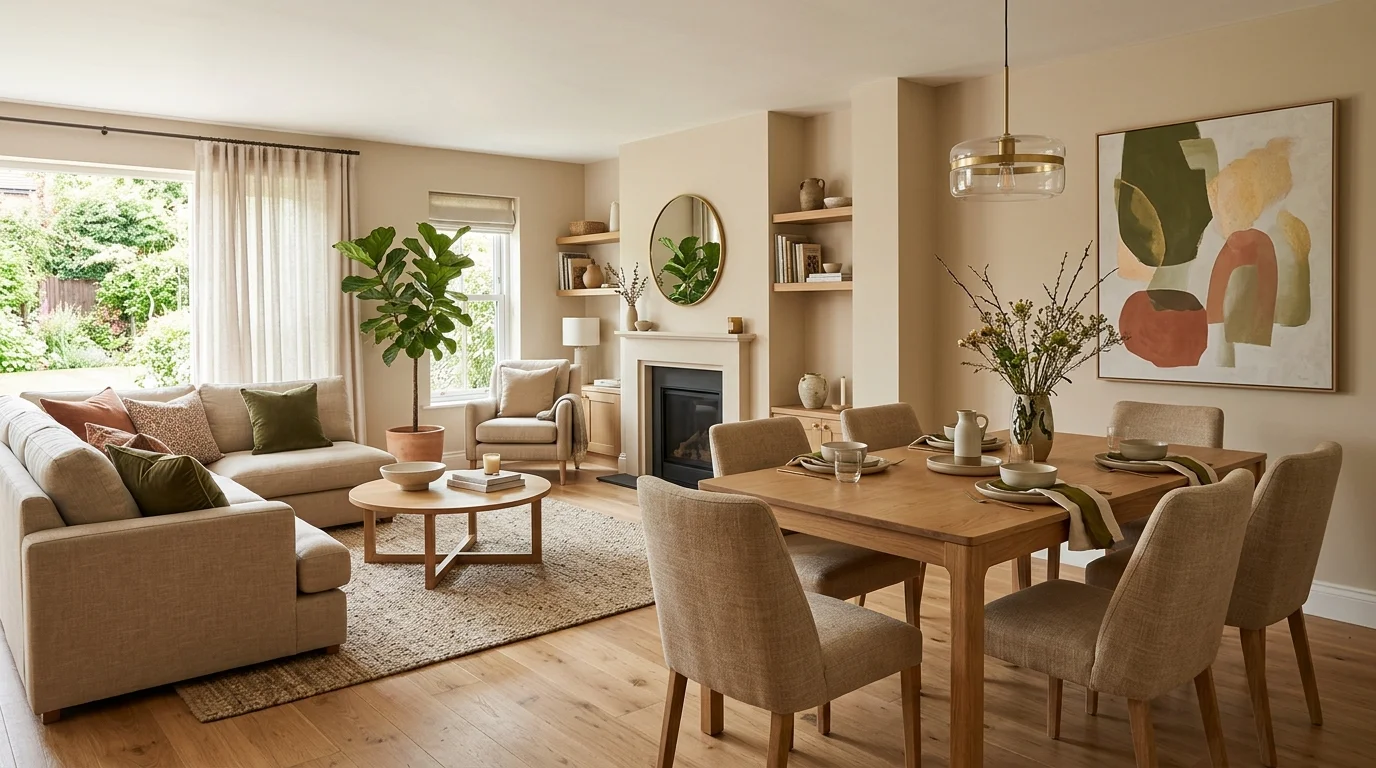
A repeated accent color can move the eye from one room to the next without forcing identical decor. This works especially well in softer neutral homes.
Idea 7
Coordinate Statement Materials
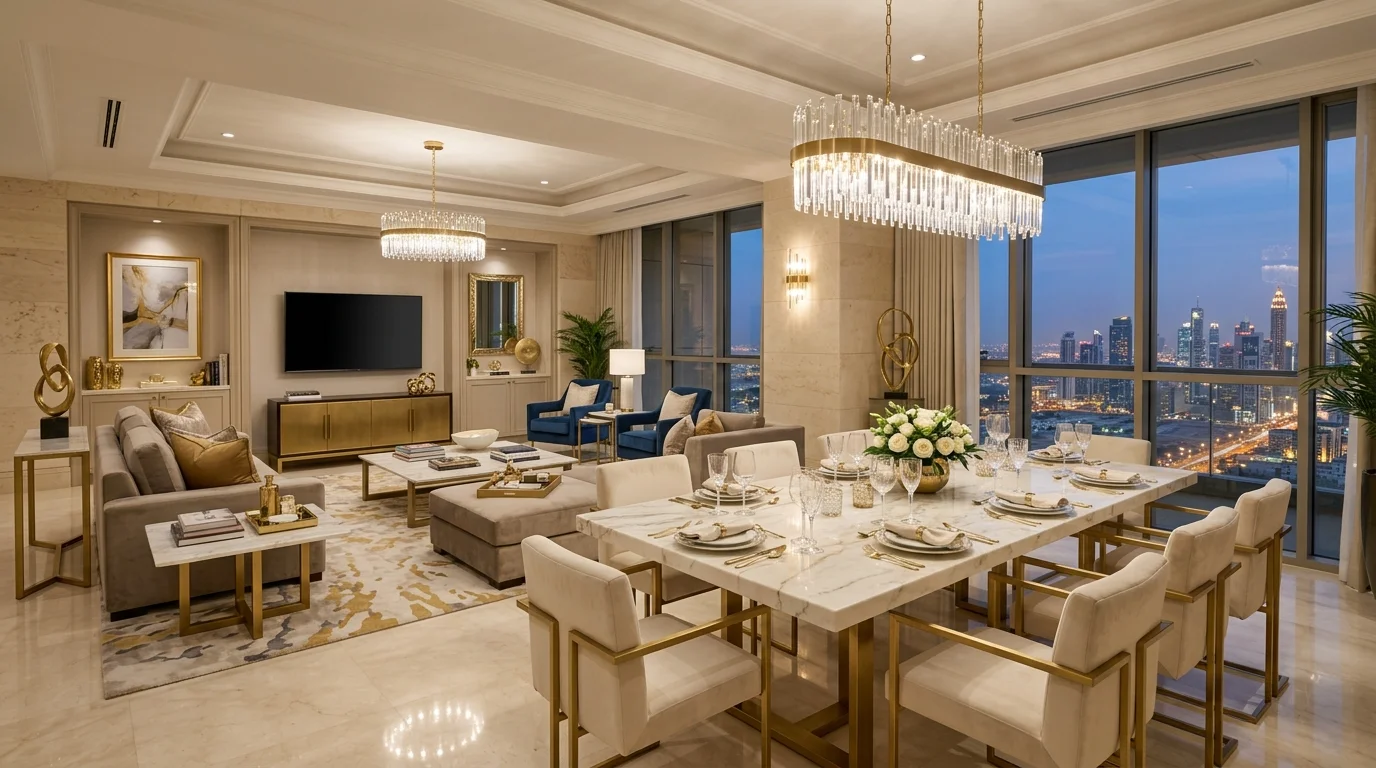
When both rooms share one standout material, like marble or brass, they feel instantly more connected. The rest of the room can stay quieter.
Idea 8
Think Small-Space Continuity
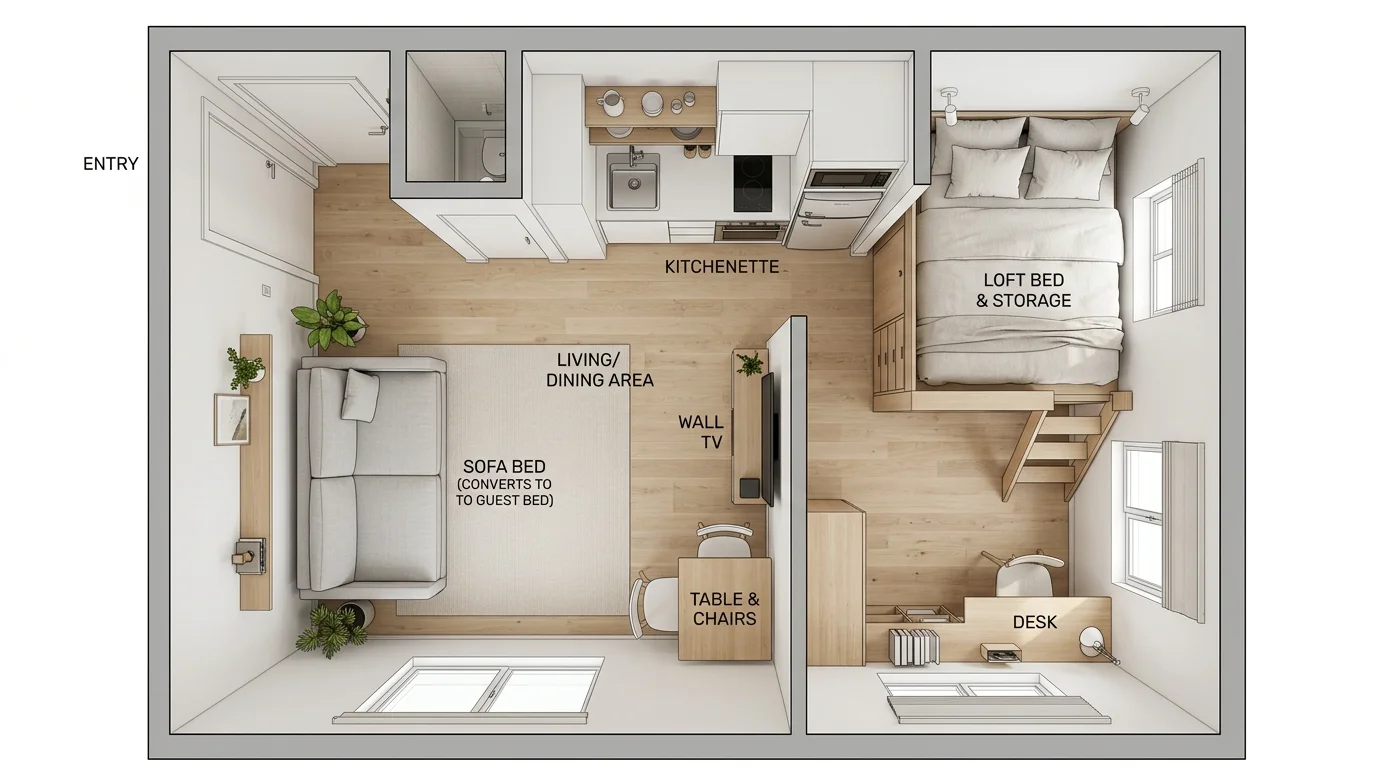
In smaller homes, consistency matters even more because there is less space between zones. Keep the furniture lines and scale related.
Idea 9
Let Flooring Run Through
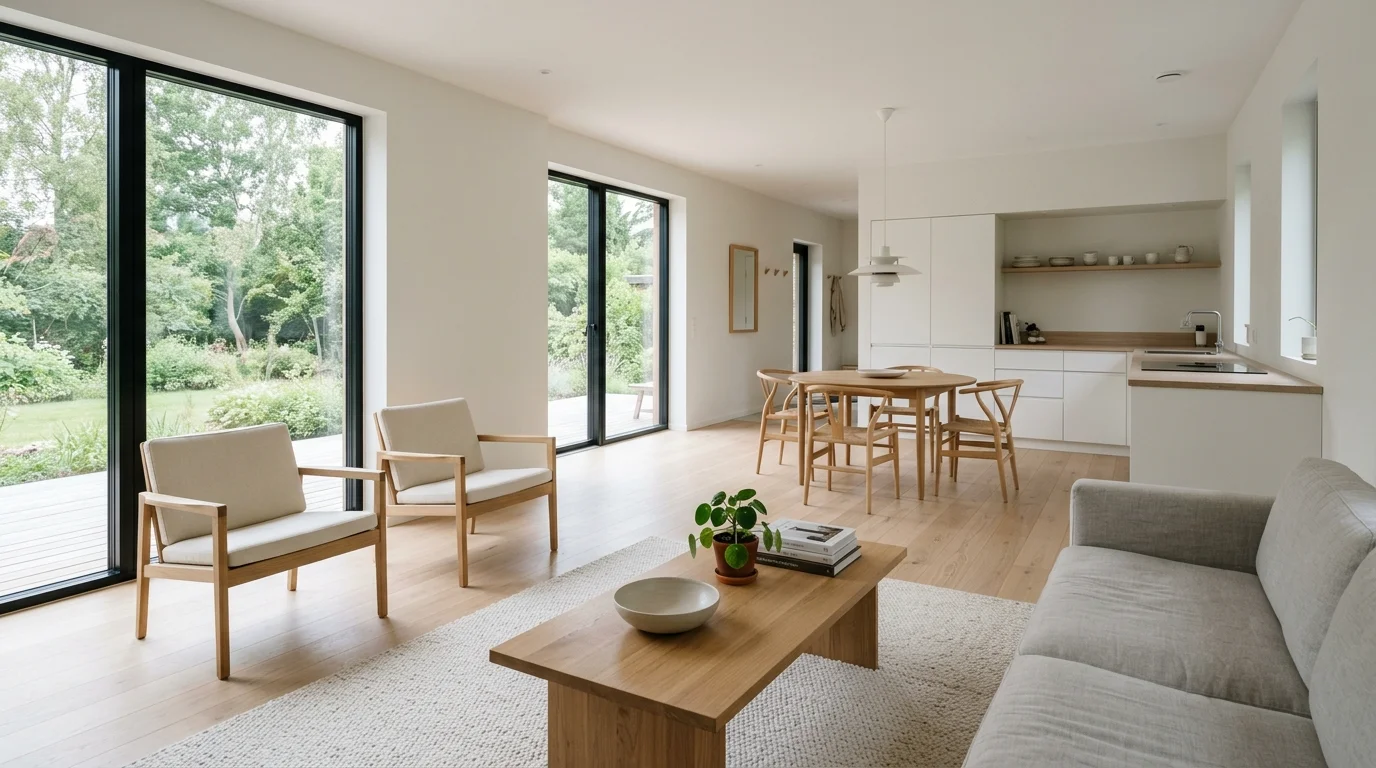
Continuous flooring is one of the strongest visual bridges between living and dining spaces. It makes the layout feel calmer and more expansive.
Idea 10
Create a Shared Feature Wall
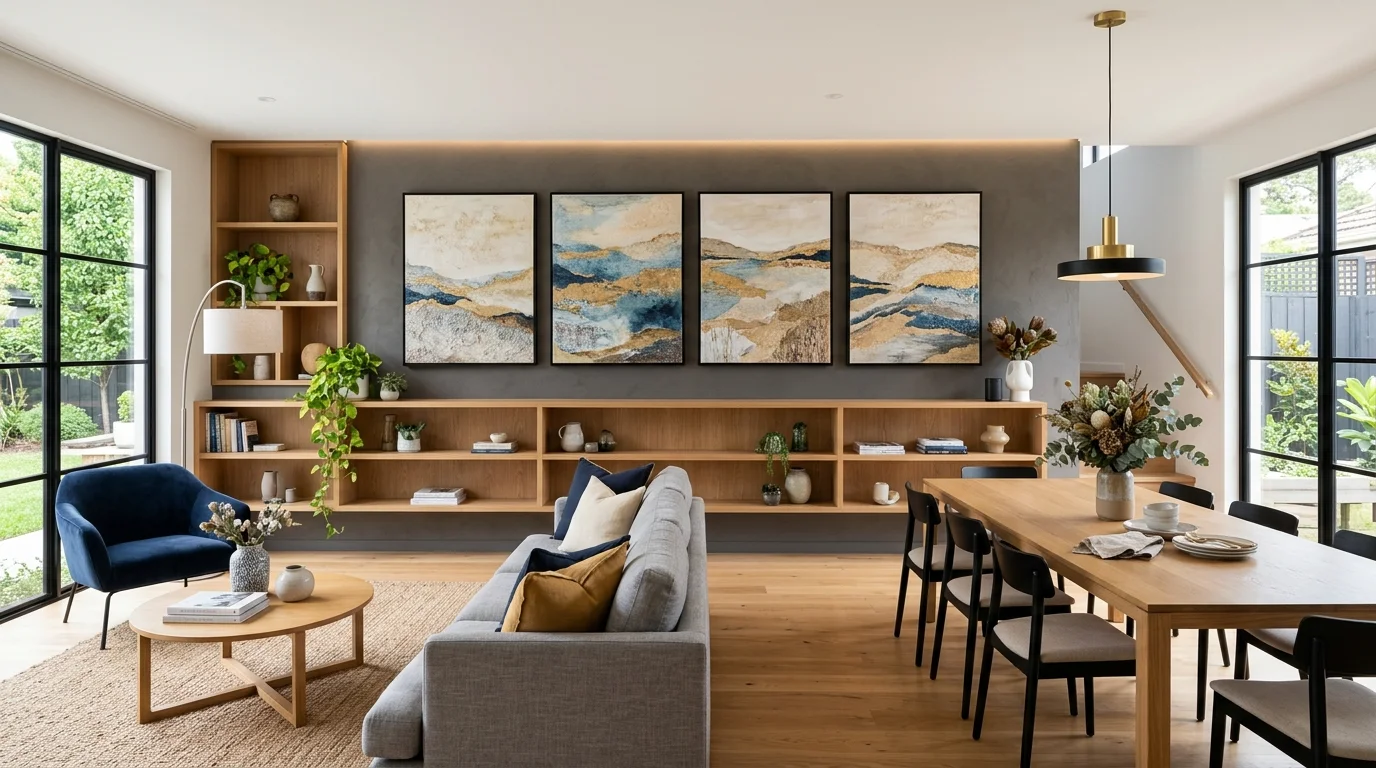
A shared feature wall can give both zones one visual anchor. Shelving or artwork helps it feel intentional rather than blank.
Idea 11
Match the Lighting Language
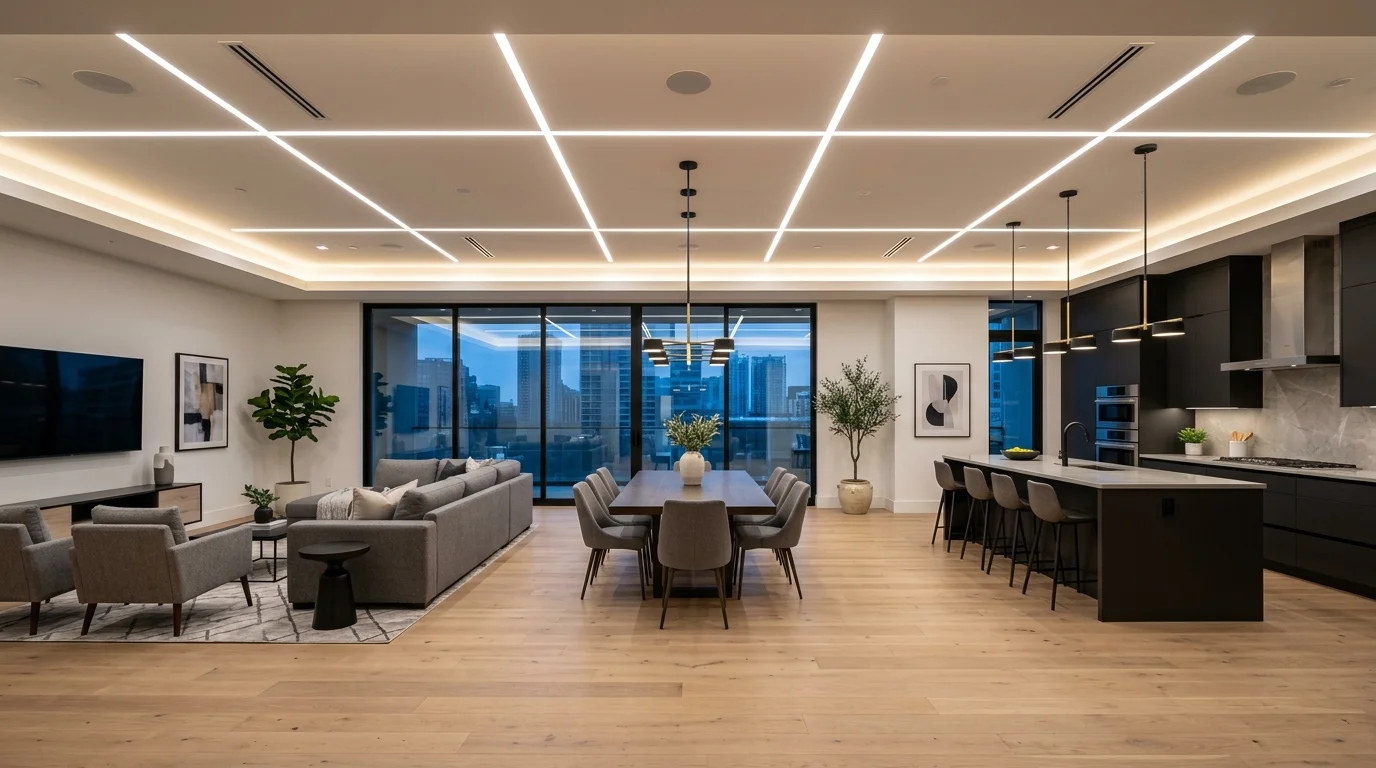
Light fixtures do not need to match exactly, but they should speak the same design language. That continuity does a lot of quiet work.
Idea 12
Use One Decor Story
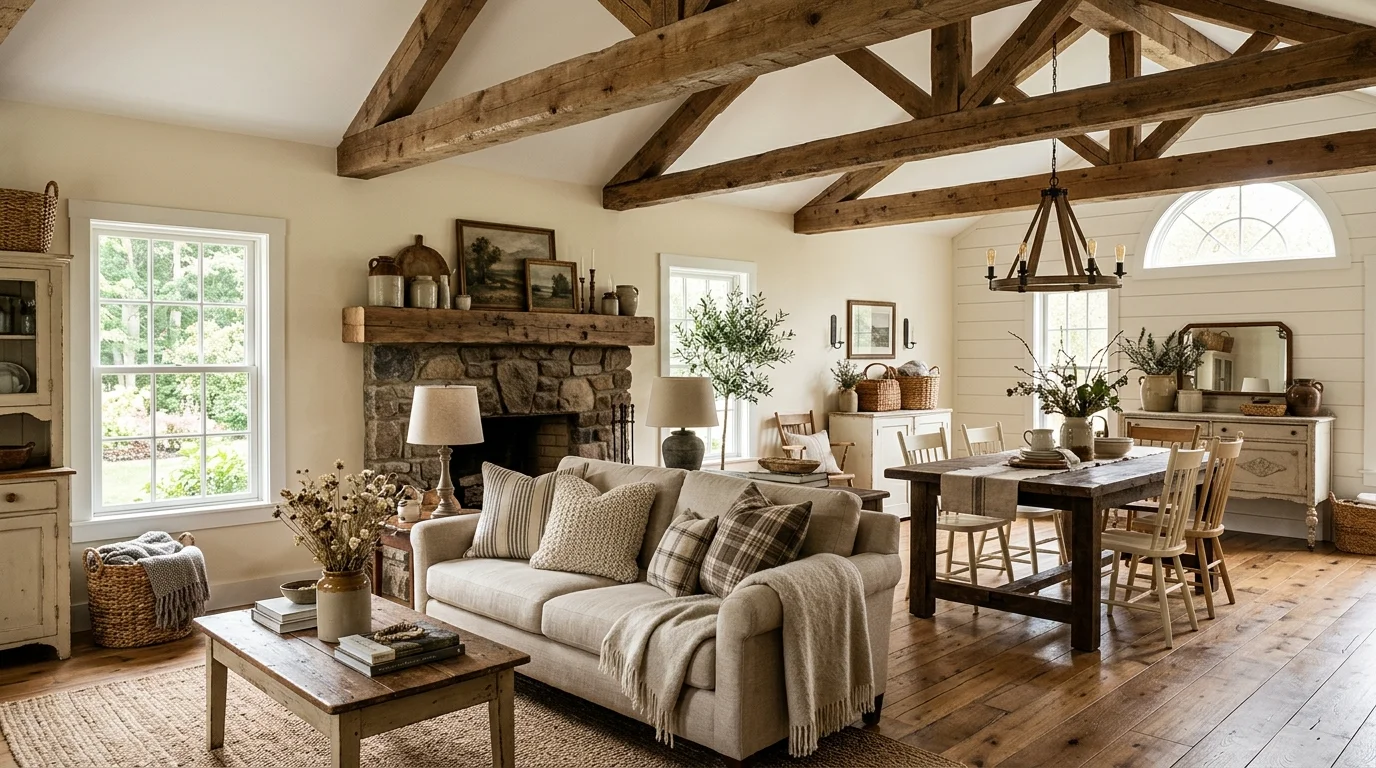
When both rooms tell the same material story, the transition feels natural. This is especially true in rustic and farmhouse interiors.
Idea 13
Blend with Soft Gradation
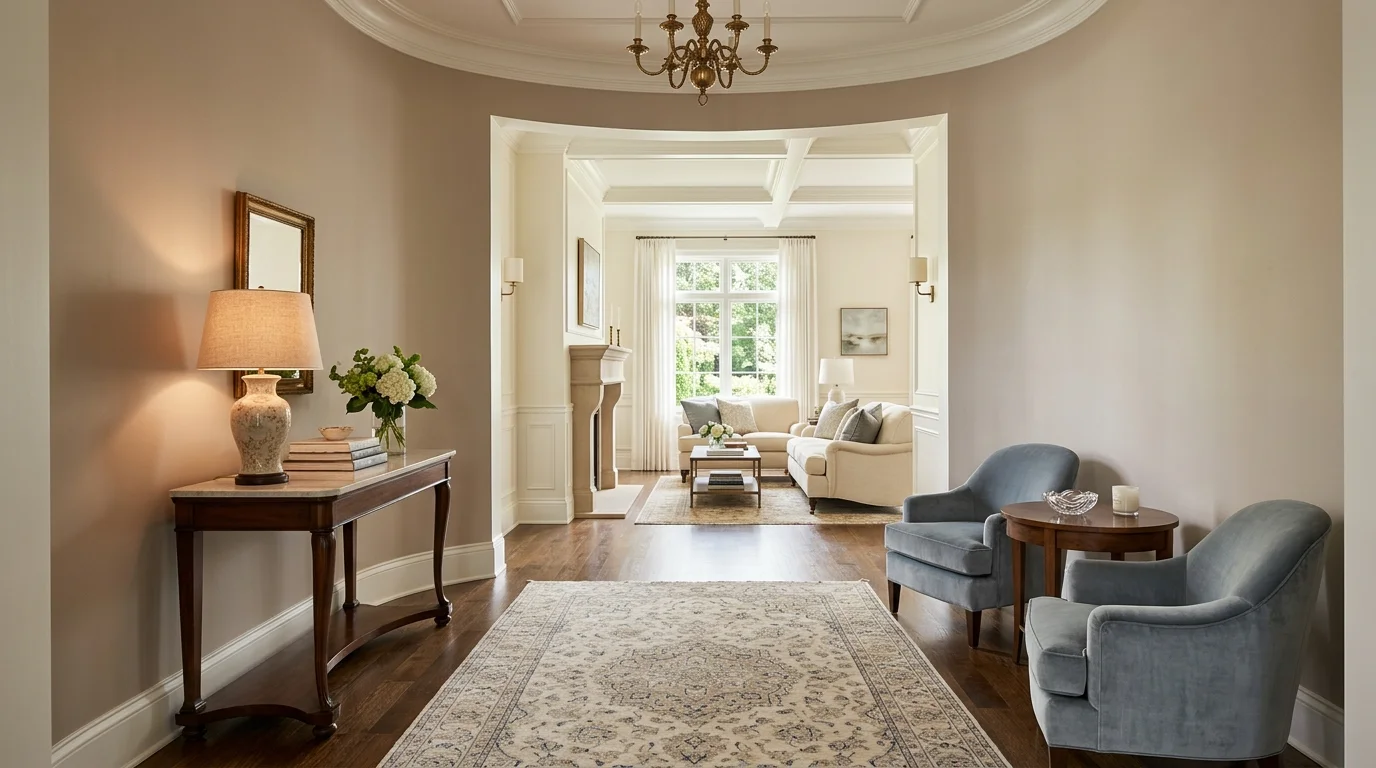
You do not need total sameness to create flow. Sometimes a gentle transition in color or fabric is what makes the whole layout feel more sophisticated.